


Inclusion, Equity, and Diversity Policy
Inclusion, Equity, and Diversity Policy
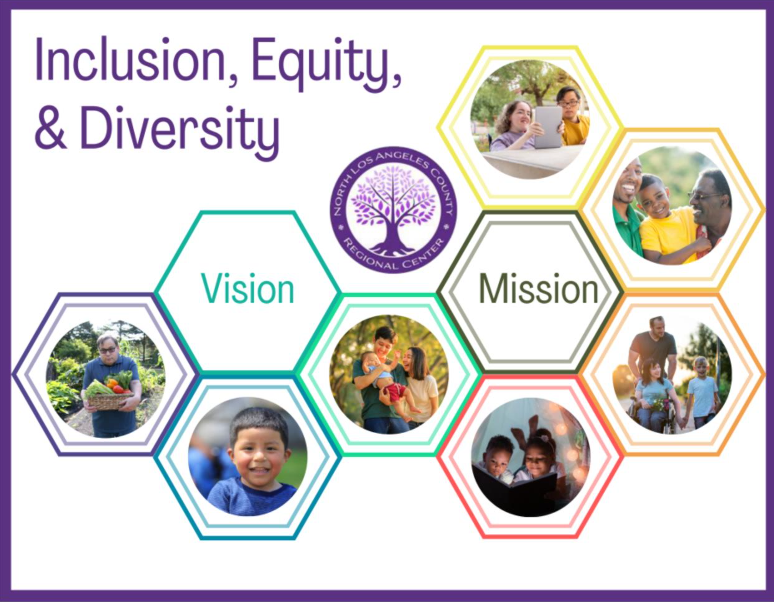
NLACRC is excited to share its Inclusion, Equity, and Diversity Policy! NLACRC is committed to identifying opportunities for change. We will focus on solutions and bringing awareness to different cultures and identities in the community.
To read our policy click here Below are parts of the policy:
Policy Vision Statement
NLACRC affirms and celebrates the inclusion, equity, and diversity for all staff, people served, their families, and communities that we support and represent. NLACRC’s vision is to empower people with developmental disabilities to have opportunities to achieve their fullest potential in all aspects of life and to embrace and showcase differences.
Policy Mission Statement
NLACRC will be a regional center in the community that brings together perspectives of all positions and roles within the community and to share thoughts and suggest actions that foster inclusion, advance equity, and promote diversity.
Language Access and Cultural Competency
The Language Access and Cultural Competency plan is a strategy to better support the language needs of individuals with developmental disabilities, their caregivers, and their family members. The primary purpose will be to improve consumer and family experience and to facilitate more consistent access to information and services for multi-lingual, monolingual, and diverse cultural groups.
The goal of the plan is to provide access to equitable, timely, and quality language assistance services to individuals with limited English proficiency (LEP), consistent with Assembly Bill (AB) 959 which requires regional centers to (a) improve access to and the quality of Agency services, programs and activities for non-English speakers and LEP persons; (b) Reduce disparities and delays, if any, in the provision of state services/programs to eligible non-English speakers and LEP persons compared with eligible English speakers; and (c) Increase agency effectiveness and public interactions.
NLACRC 2026-2028 Language Access and Cultural Competency (LACC) Plan
Fiscal Year 26-28 Allocation Amount: $2,161,638.00
Plan Duration: July 1, 2026-June 30, 2028
North Los Angeles County Regional Center’s Language Access and Cultural Competency Plan for FY 26-28 seeks to expand equitable access to Regional Center services by strengthening internal capacity, enhancing culturally responsive outreach, and deepening engagement with underserved communities in all three valleys of our catchment area. The approach integrates workforce development, multilingual communication, community partnership, and accessibility improvements to ensure meaningful inclusion across diverse populations.
Strengthening Organizational Capacity
This plan will invest in building internal infrastructure by dedicating LACC staff to lead and implement engagement activities. This includes hiring or designating multilingual, multicultural, and LGBTQIA+ specialists who can ensure services and outreach efforts are culturally responsive and aligned with community needs.
Expanding Multilingual Resources and Education
NLACRC will enhance outreach efforts through the development and dissemination of accessible, multilingual educational resources. These will include materials in the NLACRC digital library, podcasts, and in Parent University, all designed to increase awareness and understanding of available services. Outreach materials will be inclusive, culturally relevant, and tailored to engage diverse audiences effectively. Targeted outreach will focus on underserved populations, including Hispanic/Latino, Black/African American, Asian, Native American, Deaf and Hard of Hearing, and broader multicultural communities. Communication will be in threshold languages such as Spanish, Armenian, Farsi, Russian, Tagalog, Vietnamese, Korean, and ASL.
Community-Centered Engagement Strategies
NLACRC will prioritize direct community input through inclusive engagement opportunities in multiple languages to ensure that community voices directly inform service delivery and program planning. This includes hosting:
- Community meetings and focus groups for Armenian, Farsi, Tagalog, Spanish-speaking, and LGBTQIA+ communities.
- Community listening sessions with the Executive Director
- Culturally competent surveys to improve data collection and better understand community needs.
Increasing Access Through Training and Support to Reduce Barriers to Participation
NLACRC will offer in-person digital literacy training in multiple languages for adult clients and families. We will continue providing interpretation and translation services across all activities to ensure accessibility and foster inclusive participation.
Awareness and Public Information Campaigns
A coordinated outreach strategy will increase awareness of Regional Center services through multilingual advertising across local media outlets and social media platforms. Efforts will promote available resources, events, and programs to ensure broad community reach.
Accessibility Enhancements
All project materials—including websites, digital content, and printed materials—will meet established accessibility standards. This ensures equitable access for individuals with disabilities and aligns with best practices in inclusive communication.
Community Events and Education Opportunities
NLACRC will host inclusive conferences and workshops designed to educate and empower underserved communities. These events will not only provide general information but also build knowledge on specific Regional Center services, helping participants better understand eligibility, service pathways, and how to effectively access and navigate available supports.
Topics will include:
- Deaf+ supports
- LGBTQIA+ services
- Supports for aging adults
- Employment resources
- Emergency preparedness
- Dental care across the lifespan
These events will provide practical, service-specific information while creating spaces for community connection, increased awareness, and informed decision-making.
Partnership and Collaborative Outreach
NLACRC will continue fostering partnerships with community-based organizations (CBOs) and will foster connections with SAE grantees to identify and address systemic barriers to service access in our catchment area. These partnerships will enhance trust, expand reach, and ensure that outreach efforts are community-informed and sustainable.
Innovative Access Initiatives
NLACRC will continue to expand on initiatives, such as the Regional Center on Wheels, which brings engagement and support directly into the community, helping to reduce access barriers and stay connected with families and individuals in our local communities.
Disparity Committee
NLACRC has a Disparity Committee. This Committee address disparities that impact individuals served by NLACRC, their families, and others in the community. It includes NLACRC staff, as well as partners who serve people with disabilities and other minority populations.
CBOs and Partnerships
NLACRC also works with Community Based Organizations (CBOs) to address disparities. Here is a list of current CBOs that partner with NLACRC:
Community Based Organizations (CBOs)
| 24-Hour Care 24 Hour Home Care is an in-home care services provider. Phone: (866)416-9573 · https://www.24hrcares.com/ |
| AV Seed and Grow AV Seed and Grow has parent/professional support group collaborations, social events, recreational opportunities, educational workshops, links to resources, advocacy efforts and many other outreach activities for individuals and families of individuals with special needs in the Antelope Valley. Phone: (661) 492-3907 · http://avseedandgrow.org/ |
| California State University Northridge Pride Center The Pride Center supports lesbian, gay, bisexual, transgender, queer, questioning, intersex and asexual (LGBTQIA+) students, faculty and staff through programming and educational outreach. It works to improve the campus climate for LGBTQIA+ individuals as well as advocate for the respect and safety of all members of the campus community. Phone: (818) 677-4355 · https://www.csun.edu/pride |
| Children’s Hospital Los Angeles Children’s Hospital Los Angeles is one of the nation’s leading pediatric hospitals. Phone: (323) 660-2450 · https://www.chla.org |
| Integrated Community Collaborative (ICC) ICC focuses promotes equity, equality, and eradication of purchase-of-service disparities for individuals with intellectual or developmental disabilities. Phone: (424) 262-2119 · https://www.integratedcommunitycollaborative.org/ |
| Los Angeles LGBT Center The Los Angeles LGBT Center provides services for LGBT people, offering programs, services, and global advocacy that span four broad categories: Health, Social Services and Housing, Culture and Education, Leadership and Advocacy. Phone: (323) 993-7500 · https://lalgbtcenter.org |
| Mixteco Indígena Community Organizing Project (MICOP) MICOP responds to needs of the Indigenous Mixteco community in Ventura and Santa Barbara Counties through advocacy and outreach. Phone: (805) 247-1188 · https://mixteco.org |
| PathPoint PathPoint partners with people with disabilities, people with mental health diagnoses, and young adults to strengthen workplace abilities, build life skills, and develop meaningful relationships. Phone: (818) 773-9570 · https://www.pathpoint.org |
| State Council on Developmental Disabilities (SCDD) SCDD was established by state and federal law as an independent state agency to ensure that people with developmental disabilities and their families receive the services and supports they need. Phone: (818) 543-4631 · https://scdd.ca.gov/losangeles/ |
| UCLA Tarjan Center The mission of the UCLA Tarjan Center, University Center for Excellence in Developmental Disabilities is to advance the self-determination, inclusion, and quality of life among the diversity of people with disabilities and their families. They do this through collaborative leadership in training, community education, research, service, and information sharing. Phone: (310) 825-5054 · https://www.semel.ucla.edu/initiatives/the-ucla-tarjan-center/ |